
Views: 3 Author: Site Editor Publish Time: 2026-06-15 Origin: Site


As municipal landscaping waste recycling and rural forest land maintenance accelerate across North America and Europe, tractor towable wood chippers equipped with independent built-in engines have emerged as a transformative solution to fix long-standing operational flaws of traditional PTO-driven models. Industry analysts forecast that self-engine towable chippers will occupy 42% of the mobile wood chipper market by the end of 2026, overtaking conventional tractor power take-off (PTO) dependent models for the first time.
I. Breakthroughs Over Traditional PTO Design Drawbacks
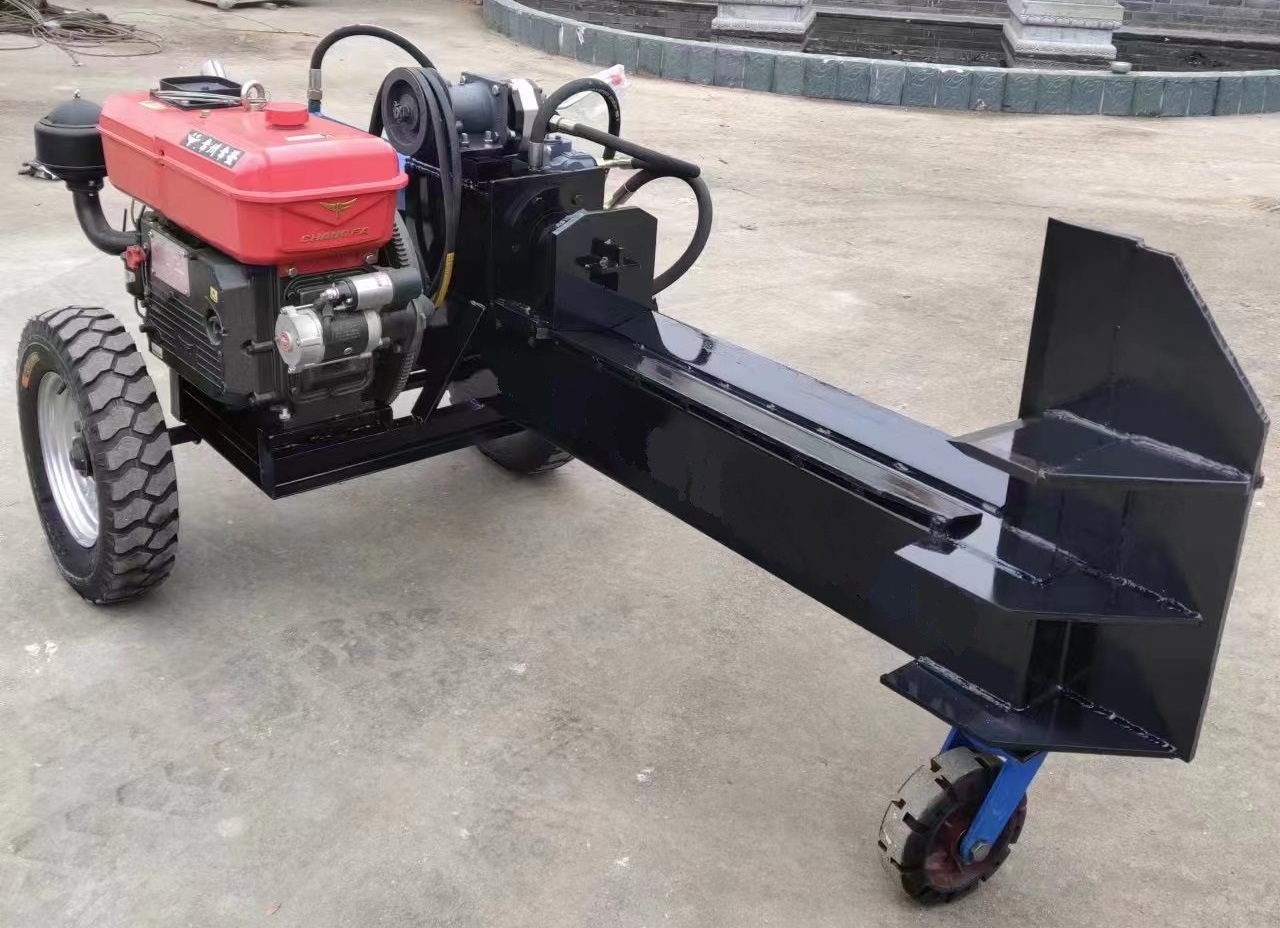
For decades, most towable wood chippers relied entirely on tractor PTO systems to supply cutting power. This design created rigid usage limitations. Operators were forced to match chipper specifications with tractor horsepower, restricting work efficiency when pairing outdated low-power tractors. Additionally, PTO connection requires professional assembly, taking an average of 25 minutes for on-site installation and posing entanglement safety risks during high-speed rotation. Unlike traditional counterparts, the new GH-120 model integrates a 42-horsepower four-cylinder diesel engine independently certified by EPA Tier 4, eliminating all power linkage with towing tractors. The tractor only undertakes transportation and terrain traction tasks, while the built-in engine provides full power for blade rotation, material feeding and debris discharge.
II. Superior On-Site Processing Performance
Field test data collected by GreenHarbor's engineering team shows tangible performance improvements in complex working scenarios. The machine supports a maximum chipping diameter of 12 inches for hardwood branches, including oak and maple, with a material reduction ratio reaching 18:1. It can process 6.2 tons of mixed tree trimmings per hour, 23% higher than equivalent PTO-driven chippers towed by the same 55horsepower farm tractor. The independent engine design also adapts to fragmented job sites. In remote mountainous woodland and roadside greenbelt zones where tractors often operate under uneven loads, separate power systems avoid tractor engine wear caused by sudden wood feeding resistance, cutting long-term tractor maintenance costs by nearly 17% for regular users.
III.Enhanced Mobility and Road Compliance
Mobility and road compliance are core competitive advantages highlighted by end users. The GH-120 adopts a reinforced dual-axle tow chassis with standard universal trailer hitches compatible with all mainstream agricultural tractors produced after 2015. It meets federal highway lightweight trailer transportation standards, allowing legal road travel between scattered work sites without additional transport permits. Large anti-slip deep-tread tires enable stable movement on muddy farmland, gravel forest paths and sloped roadside terrain, solving the stuck vehicle dilemma common for compact towable machinery in rainy seasons. Local landscaping contractors in Ohio reported that the self-powered chipper cuts cross-site transfer time by half compared with dedicated flatbed truck transportation for fixed-power chippers.
IIIV. Multi-Layer Safety Risk Mitigation
Safety upgrades address top industry accident pain points recorded by the Occupational Safety and Health Administration (OSHA). The updated unit installs three layers of protective mechanisms: a pneumatic emergency stop valve that halts blade rotation within 0.3 seconds, a curved anti-kickback feeding hopper to prevent wood rebound, and soundproof engine shielding that reduces operating noise to 82 decibels, below the regional daytime construction noise limit. OSHA statistics show that 61% of wood chipper workplace injuries between 2023 and 2025 stemmed from PTO shaft disconnection and wood kickback. Independent engine structures remove exposed rotating PTO shafts entirely, eliminating one of the highest-frequency injury sources.
V. Policy Incentives Boost Green Adoption
Environmental regulatory policies are driving accelerated market adoption. Multiple U.S. state environmental departments have updated landscaping waste management rules in early 2026, banning open burning of tree trimmings within urban and suburban boundaries. Landscaping teams must chip on-site and recycle wood debris into organic mulch for park soil improvement or biomass fuel. Self-powered towable chippers perfectly fit on-site circular processing demands. Their EPA-compliant diesel engines cut nitrogen oxide emissions by 39% compared with outdated second-hand towable models, qualifying users for state-level green machinery purchase subsidies of up to $1,800 per unit.
Looking ahead to 2027, industry research firm TimberTech Insights predicts further technical iteration. Next-generation models will integrate hybrid gasoline-electric built-in engines and intelligent feeding sensors. The sensors will automatically adjust engine rotation speed based on wood hardness to optimize fuel consumption. Meanwhile, unified international tow hitch interface standards are under drafting by the International Organization for Standardization, which will further simplify cross-brand tractor matching for global users. As circular bioeconomy policies expand globally, self-powered tractor towable wood chippers are set to become standard equipment for decentralized green waste management worldwide.


