
Views: 1 Author: Site Editor Publish Time: 2026-09-03 Origin: Site


The most headache-inducing part of farming? Digging holes, transplanting seedlings, and repeated bending are exhausting? This multifunctional agricultural hole digger is designed specifically for farmers, enabling quick planting hole-making and seedling transplantation for crops like corn and vegetables, saving time and effort while doubling efficiency. It supports manual/automatic modes and adapts to various soil types, serving as a "farming partner" for both small-scale home farms and large-scale cultivation. This article provides a comprehensive guide to its principles, applicable scenarios, key purchasing considerations, and practical tips, helping you bid farewell to "exhausting manual farming!"
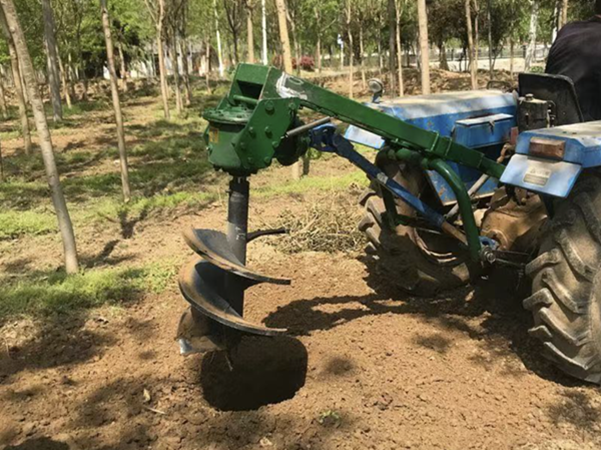
I. What is agricultural perforation machinery?
In simple terms, agricultural hole digger is a specialized "underground perforation + plant transport" integrated device designed for agricultural planting. It can automatically or semi-automatically create uniformly spaced and sized planting holes in the soil while effortlessly extracting healthy seedlings with a seedling retrieval mechanism, achieving efficient transplanting.
Despite its compact size, it effectively addresses the pain points of traditional manual farming—such as labor-intensive hole digging, uneven depths, and low survival rates. It is particularly suitable for densely planted crops like corn, tomatoes, cucumbers, peppers, eggplants, and other vegetables, as well as the seedling stage of fruit trees. After use, it can complete 300 to 800 holes per hour, achieving 5 to 10 times the efficiency of manual labor!
Its core value lies in: reducing physical exertion, improving transplant consistency, lowering seedling damage rates. It's practically a "cheat code in farming!"
II. Who should use it? A Comprehensive Analysis of Applicable Scenarios & Common Pitfalls to Avoid
Suitable for:
(1) Home gardeners, small-scale growers
(2) Technicians from agricultural cooperatives and seedling nurseries
(3) Efficient Agricultural Demonstration Park, Supporting Equipment for Rural Revitalization Projects
(4) Wanting to free middle-aged and elderly farmers from the burden of "bending over to work"
Common scenarios:
(1) Transplanting after seedling cultivation of corn/sorghum
(2) Transplanting of vegetables (tomatoes, chili peppers, leeks, lettuce)
(3) Planting grafted seedlings of fruit trees (apples, pears, cherries)
(4) Precision planting management in greenhouses
Common Misuses to Avoid:
(1) Do not force operations in areas with dense rocks or thick permafrost layers
(2) Incorrect depth settings during initial use can easily lead to "over-burying" or "root exposure" of seedlings
(3) Neglecting cleaning and maintenance leads to drill bit corrosion and jamming
(4) Using expired or low-quality batteries affects battery life stability
Tip: Check if the drill bit is sharp before each operation, maintain soil moisture at 40%~60% for optimal results, and avoid overly dry or wet conditions.


