
Views: 0 Author: Site Editor Publish Time: 2026-11-18 Origin: Site


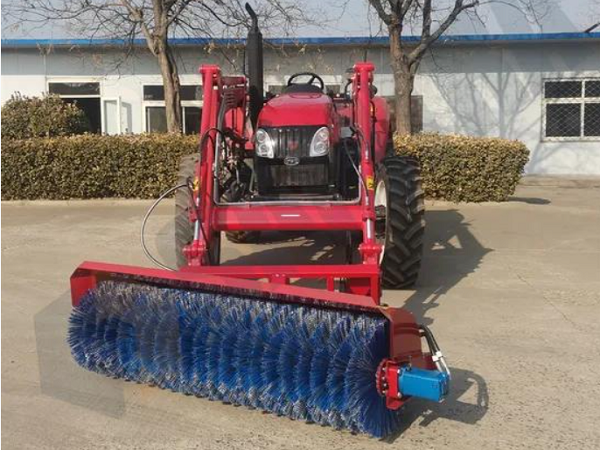
When discussing mechanical equipment for clearing snow, a solution based on the transformation of agricultural power platforms is often mentioned. The core of this type of equipment is to transform traditional agricultural machinery into engineering tools for dealing with snow sweeper in winter. Its working logic is not a completely new design from scratch, but rather an expansion of the functionality and scenario migration of existing mature mechanical systems.
I. The agricultural essence of power foundation
The fundamental design goal of the tractor platform relied upon by this type of snow removal equipment is to meet the needs of agricultural cultivation. This means it has several key features: a high ground clearance to cope with uneven field terrain, strong low-speed torque output for towing heavy agricultural tools, and the use of rear wheel drive or four-wheel drive to achieve good field passability. These characteristics provide favorable conditions for snow removal operations-high ground clearance helps to drive on unconsolidated or uneven snow surfaces, high torque can drive snow removal devices, and a good driving form ensures basic mobility on icy and snowy roads. Its engine is usually a diesel engine, focusing on fuel economy and continuous reliability, rather than pursuing high-speed performance of road vehicles.
II. Key interfaces for functional conversion
The core of turning agricultural tractors into snow sweeper lies in the conversion of three functional interfaces. Firstly, there is the power output interface, which is the standard power output shaft at the rear of the tractor. Its standard speed and torque output are designed to drive agricultural tools such as rotating plows and seeders. It can also be adapted to hydraulic pumps to provide hydraulic power for lifting and deflection of snow shovels. Next is the suspension and connection interface. The three-point suspension system at the rear of the tractor is an internationally recognized standard for agricultural tool connection, which allows for quick installation or removal of the front snow shovel or rear snow remover through the corresponding mounting bracket. Finally, there is the driving control interface. The hydraulic valve control lever position reserved in the tractor cab can be easily installed to control the action of the snow removal device.
III. Types and mechanisms of snow removal accessories
There are several forms of snow sweeper that are suitable for this type of power platform, each with its own mechanism of action. The front mounted hydraulic snow shovel is the most common type, which is fixed to the front end of the tractor through a frame and uses the tractor's thrust to push the snow to one side of the road; The blade angle of the shovel can usually be adjusted hydraulically to meet different needs of snow pushing or snow removal. Another type is a rotary snow sweeper, which drives a high-speed rotating drum shaped rotor through the tractor power output shaft. The blades on the rotor chop up the snow and throw it in a designated direction, suitable for clearing thick snow or long-distance snow throwing. Another type is the V-shaped plow, which has a structure that can separate snow to both sides simultaneously, with high efficiency, and is commonly used for quickly opening lanes.
Snow removal equipment based on agricultural tractor platforms is essentially a functional adaptation solution for seasonal needs. It does not pursue advanced performance in a single function, but focuses on the comprehensive utility and cost balance in the whole life cycle of equipment. The technical focus is on how to safely, reliably, and efficiently achieve power transmission and control from agricultural power to engineering attachments, and find the most effective operating methods and economic applicability under specific geographical and climatic conditions. The existence and development of this solution reflect a continuous and dynamic balance between universality and specificity in the field of mechanical equipment applications.


