
Views: 12 Author: Site Editor Publish Time: 2026-07-30 Origin: Site


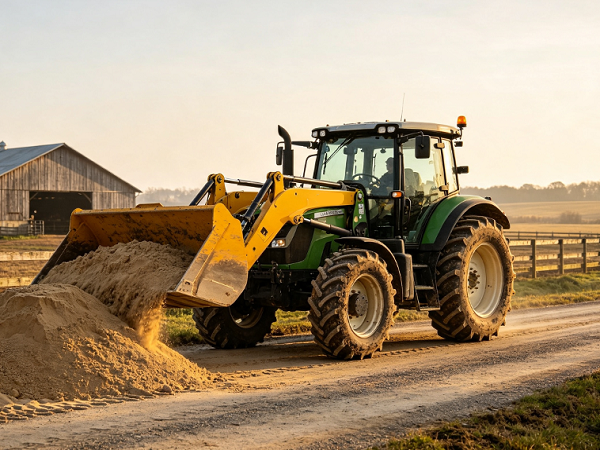
For farmers, landscapers and rural property owners, front end loaders are among the most valuable tractor attachments, turning standard farm machinery into versatile tools for lifting, scooping, hauling and clearing materials. A common question circulating among equipment users is whether a front end loader can be fitted to any tractor model, regardless of size, brand, or configuration. According to agricultural equipment industry experts and manufacturer guidelines, the clear answer is no. Not all tractors support front end loader installation, and improper fitting poses severe safety risks, mechanical damage, and operational inefficiencies.
I. Three Core Compatibility Determinants
Many amateur equipment owners assume front end loaders feature universal compatibility, given the wide availability of aftermarket loader kits and quick-mount accessories on the market. This misconception has led numerous users to attempt DIY installations on incompatible tractors, resulting in costly repairs and workplace accidents. Industry technicians emphasize that front end loader compatibility relies on three non-negotiable factors: structural frame integrity, hydraulic system capacity and
power output matching, none of which are standardized across all tractor models.
II. Reinforced Frame Structure: Fundamental Requirement
The first critical barrier to universal installation is tractor frame structure. Front-end loaders generate substantial forward weight pressure and lifting torque during operation. Only tractors reinforced with dedicated mounting brackets and heavy-duty chassis frames can withstand these mechanical stresses. Lightweight lawn tractors, entry-level compact utility tractors, and vintage tractor models often lack reinforced front frames and factory-designed mounting points. Fitting a loader on these unmodified units leads to frame bending, front axle failure, and even catastrophic structural collapse during heavy lifting tasks.
III. Hydraulic System Matching Guarantees Normal Operation
Hydraulic system compatibility serves as another core limiting factor. Front end loaders depend entirely on a tractor's hydraulic flow and pressure to operate lift arms, buckets, and auxiliary attachments like grapples and pallet forks. Modern loaders require a consistent hydraulic flow rate to maintain smooth and stable movement. Many low-horsepower and older tractors feature weak, low-volume hydraulic systems that cannot meet loader operational demands. Insufficient hydraulic power causes slow response times, weak lifting force, and premature wear of hydraulic pumps and valves, ultimately shortening the service life of both the tractor and the loader.
IIIV. Horsepower Rating Directly Restricts Loader Adaptability
Power rating matching is equally essential for safe and efficient loader use. Equipment industry guidelines establish strict horsepower-to-lift-capacity matching standards. Small tractors below 25hp are exclusively designed for light mowing and tillage work and cannot support any functional front-end loader. Compact tractors ranging from 25 to 45hp only pair with light-duty loaders for small-scale material handling, while medium and large farm tractors above 45 HP accommodate heavy-duty loaders for agricultural production and construction tasks. Mismatched power configurations, such as installing a heavy loader on a low-HP tractor, trigger engine overload, excessive fuel consumption, and accelerated mechanical wear.
V. Official Manufacturer Standards Guide Standardized Installation
Leading agricultural machinery brands, including John Deere and Solis, have released official compatibility charts to standardize loader installation. These documents clearly define which tractor models, chassis types, and hydraulic specifications support factory and aftermarket loaders. Most reputable manufacturers also adopt standardized quick-change mounting systems for compatible models, enabling fast, safe installation and removal while ensuring structural stability during operation. Industry advisors strongly recommend users verify official compatibility data before purchasing loader kits, rather than relying on universal product marketing claims.
VI. Hidden Safety Hazards of Inappropriate Modification
Beyond mechanical compatibility, safety compliance further restricts universal loader fitting. Agricultural safety regulations require all front end loader equipped tractors to maintain balanced weight distribution and stable center of gravity. Incompatible installations alter the tractor's original weight balance, drastically increasing the risk of tipping on sloped terrain or during uneven lifting operations. Professional technicians stress that safety risks far outweigh the cost savings of unapproved DIY modifications.
In summary, while front-end loaders greatly enhance tractor versatility, they remain specialized attachments with strict compatibility requirements. No tractor can be arbitrarily fitted with a front-end loader. Strict adherence to manufacturer standards and professional matching guidelines is the only reliable way to maximize equipment efficiency and eliminate potential safety hazards in agricultural and landscaping operations.


