
Views: 2 Author: Site Editor Publish Time: 2026-03-27 Origin: Site


Hole diggers, once simple manual tools for gardening and small-scale construction, have undergone a remarkable transformation in recent years. Driven by technological innovation, growing infrastructure demands, and evolving user needs, these essential tools have evolved into versatile, efficient machines that span from handheld gas-powered models to intelligent, autonomous systems, reshaping industries ranging from agriculture to aerospace.
I. Global Market on Steady Growth Trajectory
The global market for hole diggers and related digging tools is on a steady growth trajectory. According to a recent industry report, the global digging tools market, which includes various types of hole diggers, is valued at $1.08 billion in 2026 and is projected to reach $1.35 billion by 2035, with a compound annual growth rate (CAGR) of 2.4%. This growth is fueled by increased investment in infrastructure construction, the acceleration of agricultural modernization, and the expansion of urban underground pipeline renovation projects.
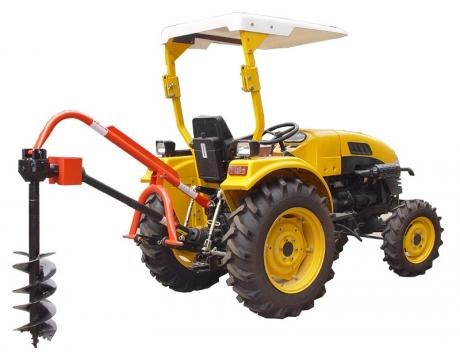
A key trend in the hole digger industry is the diversification of product types to meet specific application needs. Gas-powered hole diggers, in particular, have become indispensable in landscaping, farming, fencing, and construction due to their portability, power, and speed unmatched by manual tools. They are categorized into single-bit, double-bit, and auger diggers, each designed for distinct tasks: single-bit diggers excel at deep, narrow holes in tough soil, double-bit models create wider, more stable holes, and auger diggers use spiral blades to efficiently remove soil, making them ideal for gardening and landscaping.
II. Manual Hole Diggers: Still Relevant with Continuous Innovations
Manual hole diggers, however, remain relevant for small-scale tasks. Twin-handled, single-handled, clamshell, and post hole diggers cater to different scenarios, from planting trees in soft soil to digging fence posts in narrow spaces. Recent innovations in manual tools, such as the DigEZ Industrial Post Hole Digger, feature ergonomic designs with 40% less handle travel distance, reducing operator fatigue and improving efficiency. Meanwhile, inventors continue to refine manual designs; a patent-pending modified post hole digger, for example, doubles as a trencher and edger, offering a cost-effective solution for small-scale projects.
III. Transformative Shift: Rise of Intelligent and Autonomous Models
The most transformative shift in the industry is the rise of intelligent and autonomous hole diggers. These advanced machines integrate cutting-edge technologies such as laser radar, quantum inertial navigation, and digital twin systems to achieve precise, efficient, and safe operation. In extreme environments, from the 5,000-meter-high plateaus of Tibet to the 3,800-meter-deep seabeds of the Pacific, intelligent hole diggers and excavation robots are completing tasks that were once impossible for human operators.
On the consumer side, hole diggers have also made their way into entertainment. "Hole Digging Simulator 2025," released for PlayStation 4, allows players to explore underground worlds, unearth treasures, and upgrade their digging tools, reflecting the widespread cultural relevance of these tools. Meanwhile, safety remains a critical concern, as highlighted by a recent incident in Brazil where a British tourist was nearly buried alive after a 2.4-meter-deep hole he dug on a beach collapsed, underscoring the importance of proper usage and awareness, even with simple manual digging.
IIIV. Regional Market Features: Asia-Pacific Leads the Global Trend
Regional markets show distinct characteristics, with the Asia-Pacific region leading the global market with approximately 45% of the share, driven by massive infrastructure investment in countries like China and India. In China, domestic manufacturers are making significant strides; a domestically developed large-diameter shaft boring machine, dubbed a "well-digging giant," recently pioneered a new construction method for rainwater regulation pools in Shanghai, completing vertical digging efficiently and safely.
V. Future Outlook: Intelligence, Efficiency and Environmental Friendliness
Industry experts predict that the hole digger market will continue to evolve, with a focus on intelligence, efficiency, and environmental friendliness. Electric models and eco-friendly composite materials are expected to gain traction, reducing energy consumption and environmental impact. As technology advances, hole diggers will further expand their applications, from deep-sea resource extraction to lunar and Martian infrastructure construction, continuing to support human progress in exploring new frontiers.
"From manual shovels to smart machinery, hole diggers have become a cornerstone of modern engineering and daily life," said an industry analyst. "Their evolution mirrors our pursuit of efficiency and innovation, and they will remain essential tools as we tackle new challenges in construction, agriculture, and beyond."


