
Views: 5 Author: Site Editor Publish Time: 2026-06-12 Origin: Site


Local arboriculture and farm maintenance contractors across Northern England are rapidly upgrading their work fleets with PTO-driven wood chippers this spring, as soaring roadside tree pruning workloads and stricter national green waste disposal regulations push low-cost, mobile vegetation processing solutions into mainstream use. Industry dealers report a 42% year-on-year sales increase for tractor-mounted wood chippers in the first five months of 2026, outpacing standalone towable chippers and walk-behind shredders by a wide margin.
I. On-site Efficiency Gains in Tree Clearing
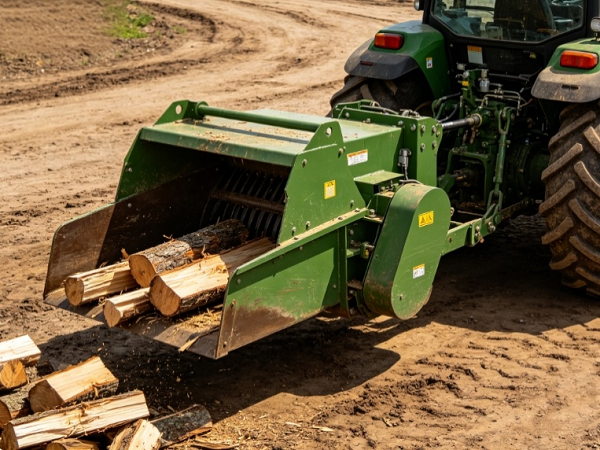
On a roadside vegetation clearance site near Wakefield last week, field crews from Treescape Tree Services Ltd deployed a newly matched 55horsepower tractor and Timberwolf TW 280FTR mounted wood chipper to remove dead ash trees affected by ash dieback disease. The equipment combination processed 12 cubic meters of tree branches and trunk fragments within four hours, a task that previously required two separate towable chippers and six hours of continuous operation. Unlike independent chippers that rely on separate diesel engines, this mounted model draws full power directly from the tractor's power take-off (PTO) shaft, eliminating redundant fuel consumption and extra engine maintenance costs.
II. Cost and Terrain Advantages Over Traditional Tools
Steve Gethin, director of Treescape Tree Services, explained on-site that the shift to tractor-mounted wood chippers stems from both operational efficiency and budget considerations. "Before 2025, most small and medium tree service firms used towable chippers for roadside jobs, but they face critical limitations. Towable units cannot navigate narrow farm lanes and uneven woodland terrain and their separate engines need quarterly oil changes and filter replacements. By contrast, our existing fleet tractors already cover all terrain access needs. Adding a three-point hitch wood chipper attachment only costs 30% of purchasing a standalone diesel chipper, and we cut annual mechanical maintenance spending by nearly £2,400.”
III. Safety and Structural Technical Upgrades
Technical upgrades in 2026 have further expanded the application boundaries of tractor-matched wood chippers. Leading agricultural machinery manufacturers including Timberwolf and ARBMAX have optimized drum blade structures and hydraulic infeed systems for mid-range tractors (40hp to 75hp). The updated ARBMAX D35 model, compatible with 70hp tractors, features a 13-inch infeed opening and reinforced alloy blades, capable of chipping hardwood logs with a diameter of up to 33 centimeters. It also adds an automatic reverse feeding function to prevent blade jams, a common safety hazard that caused 17 operator injuries across the UK in 2025. Local agricultural safety regulators have updated operational guidelines this month, recommending tractor-mounted hydraulic feed chippers as the priority choice for commercial vegetation teams.
IIIV. Circular Economy Benefits for Rural Operators
Beyond commercial arboriculture, family farms and rural local councils are also driving market growth. British countryside councils face tightened Environment Agency rules that ban open-air burning of agricultural wood waste starting in July 2026. Previously, 38% of rural farms burned pruned orchard branches and hedgerow trimmings on-site, a practice now subject to fines ranging from £400 to £3,000. Tractor-mounted wood chippers offer a compliant circular economy solution: chipped wood mulch can be reused directly for farm soil covering, livestock bedding, or sold to biomass power plants for renewable energy generation. Regional biomass suppliers currently pay £28 per ton for clean hardwood chips, creating an additional sideline income for small-scale farmers.
V. Key Barriers to Large-scale Adoption
Despite robust market demand, industry insiders point out two lingering bottlenecks restricting wider adoption. First, operator skill gaps remain prominent. Most general tractor drivers lack professional training for chipper attachment alignment and emergency shutdown procedures. Davies Implements, a regional agricultural machinery dealer, noted that only 29% of tractor operators in Northern England have completed official chipper safety training. Second, compatibility mismatches persist for older tractor models manufactured before 2015. These outdated devices lack standardized PTO speed regulators, which can cause blade structural damage during high-load chipping.
Industry analysts at Timberbiz forecast that tractor-mounted wood chipper penetration will rise from 41% to 63% among UK vegetation management contractors by the end of 2026. Driven by carbon reduction targets and waste disposal policy tightening, the global market for tractor-mounted wood chippers is projected to grow at a compound annual growth rate of 7.8% through 2030.


