
Views: 5 Author: Site Editor Publish Time: 2026-08-07 Origin: Site


As land grading, farmland renovation, and residential landscape construction projects expand rapidly globally, box scrapers have become indispensable core attachments for tractors, ATVs and UTVs. Widely used for land leveling, soil spreading, road maintenance and field clearing, this versatile equipment directly determines construction efficiency and ground finishing quality. However, many contractors and individual users struggle with improper model selection, leading to low working efficiency, equipment wear and even safety hazards. Industry experts have released a systematic selection guide to help users pick cost-effective, task-matched box scrapers for diverse working scenarios.
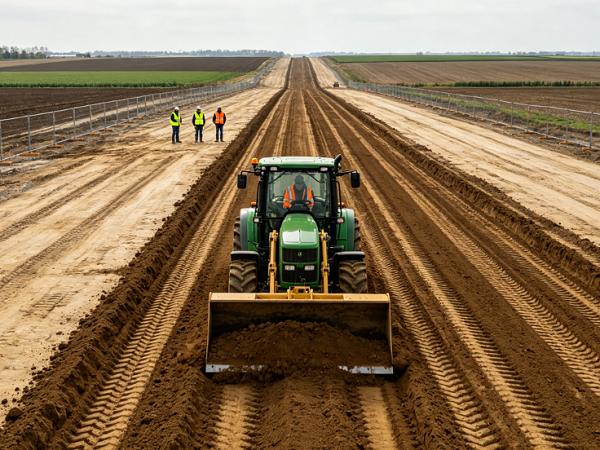
I. Prioritize Equipment and Hitch Compatibility
The primary principle of choosing a box scraper is equipment compatibility, which serves as the foundation of stable and efficient operation. According to agricultural machinery professionals, box scrapers are mainly divided into two mainstream types: three-point hitch models and tow-behind models. Three-point hitch box scrapers are categorized into Cat 0 and Cat 1 classes, which must strictly match the tractor’s hitch specification and lift capacity. Most compact garden tractors adapt to Cat 0 systems, while medium and heavy-duty farm tractors require Cat 1 compatible scrapers. For users relying on ATVs and UTVs, tow-behind box scrapers with universal hitch interfaces are more suitable, featuring flexible installation and strong mobility. Mismatched hitch types will cause unstable mounting, scraper shaking and incomplete ground leveling during operation.
II. Match Blade Width with Working Scenarios
Working width is another decisive factor affecting construction efficiency and operational flexibility. Industry tests show that blade width should be matched with equipment power and construction site conditions. Narrow box scrapers with a width of 40 to 48 inches are ideal for small-scale projects, including residential yard renovation, narrow farmland plots and tight roadside maintenance. They feature high maneuverability and can adapt to complex narrow spaces. For large-area farmland leveling, open road renovation and large-site land trimming, 50 to 60-inch wide box scrapers are preferred. Although wider models cover more ground per operation and greatly improve construction progress, they require higher tractor power and stable steering performance to avoid operational deviations.
III. Focus on Material Quality and Structural Durability
Structural durability and material craftsmanship determine the service life and long-term use cost of box scrapers. High-quality box scrapers adopt thickened high-strength steel plates, which can resist abrasion and impact from hard soil, gravel and complex terrain. Experts emphasize that users should prioritize models with replaceable wear strips and reinforced side panels. Wear-resistant blade edges effectively reduce daily loss, while replaceable accessories avoid overall scraper replacement after partial wear, significantly lowering maintenance costs. In contrast, low-cost thin-wall steel scrapers are prone to deformation and blade wear after short-term use, leading to uneven leveling effects and frequent equipment failures.
IIIV. Select Functional Configurations Based on Actual Needs
Functional configuration selection needs to be based on actual project demands to avoid overinvestment or insufficient performance. Basic manual-adjustment box scrapers are sufficient for simple flat land leveling and light soil spreading, with low prices and simple operation, suitable for individual household use. For professional engineering and large-scale agricultural projects, models with hydraulic height and angle adjustment are more practical. Hydraulic control allows real-time adjustment of scraping depth and angle without manual disassembly, greatly improving construction precision and efficiency. Additionally, optional accessories including skid shoes and rear grading blades can enhance adaptability to uneven terrain and meet refined grading requirements.
V. Balance Budget and After-Sales Service


