
Views: 0 Author: Site Editor Publish Time: 2026-08-11 Origin: Site


Disc harrows are divided into three types: heavy, medium, and light according to the weight of the entire machine and the diameter of the harrow blades. Disc harrow is generally composed of a harrow group, frame, angle adjuster, traction or suspension device, etc. The traction harrow is also equipped with transport wheels. The harrow is a spherical disc.
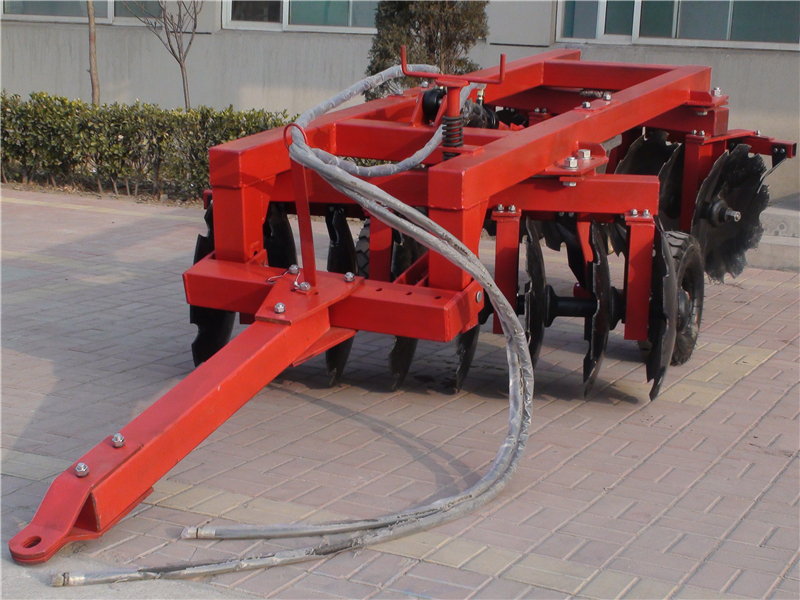
When working, the rotating plane of the disc harrow is perpendicular to the ground and forms an angle (deflection angle) with the forward direction. During homework, each blade of the harrow group rolls forward along the entire square axis. Under the gravity of the harrow, it enters the soil, cutting off grass roots or crop residues, and causing the chopped soil to slightly rise along the concave surface of the harrow, with a certain flipping effect. The harrow depth is related to the weight of the machine and the deflection angle of the disc. Increasing the deflection angle can increase the penetration depth of the harrow blade and improve the soil turning effect.
There are generally three basic surgical methods: direct vision method, horizontal method, and oblique method. When raking, the direction of the harrow should be consistent with the plowing direction. If the soil is soft and has been broken to a certain extent, it will have a good effect, otherwise it will be difficult to plow the ditch with a rake. When using a horizontal harrow, the harrow direction is perpendicular to the plow pole, which has a good effect on cutting, crushing, and leveling soil. However, the machine has high jolting and resistance. When raking diagonally, the direction of the harrow teeth forms a 45 ° angle with the plowing direction. The inclined harrow, also known as the inclined harrow method, has good effects on cutting, crushing, and leveling soil, and the unit travels more smoothly. This is a better method of harrowing.


