
Views: 14 Author: Site Editor Publish Time: 2026-06-10 Origin: Site


As seasonal planting, hay harvesting and livestock transportation enter peak periods across North America and Europe, mismatched farm trailers have become a top cause of rural roadside accidents. For small-scale family farms and large commercial agricultural estates, picking a cost-effective, terrain-adaptive and tow-compatible, farm trailer has turned into a core task to cut operational risks and improve field efficiency. Farmers need to evaluate towing matching, cargo demands, structural durability and safety configurations comprehensively before making purchases.
I. Match Trailer Capacity with Towing Vehicles
The first decisive evaluation indicator is matching towing capacity with existing farm vehicles. Most rural operators make the mistake of prioritizing large cargo space without checking tractor or pickup truck towing limits. Every farm vehicle has a labeled Gross Vehicle Weight Rating (GVWR), covering the total weight of the empty trailer, cargo and passengers. For small family farms with tractors below 80 horsepower, single-axle trailers with a GVWR under 3,500 pounds are the optimal choice. They feature flexible turning radii that adapt to narrow field paths, muddy ridges and tight farm gate passages, and require no special driver licensing. For large estates transporting bulk grain or heavy harvesting machinery, double-axle or gooseneck trailers are necessary. Unlike standard bumper-hitch trailers, gooseneck designs shift tongue weight above the tow vehicle's rear axle, eliminating fishtailing on uneven gravel roads. Meanwhile, farmers must follow the 10% to 15% tongue weight rule: excessive tongue weight strains tractor suspension, while insufficient weight causes dangerous trailer sway during downhill travel.
II. Select Trailer Types Based on Cargo Scenarios
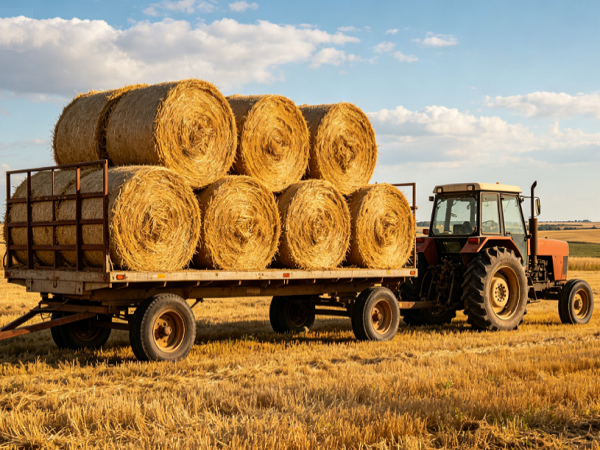
Trailer types must align with long-term cargo transportation scenarios, as one-size-fits-all models raise long-term maintenance costs. Four mainstream categories dominate current agricultural markets, each targeting exclusive usage needs. Dump trailers are the most widely used for daily farm work, ideal for moving soil, fertilizer, crop residues and loose grain. Equipped with hydraulic lifting systems, they cut manual unloading time by over 70% and suit farms with frequent bulk material handling. Flatbed trailers, usually 16 to 20 feet in length, excel in transporting hay bales, lawn mowers and portable irrigation equipment, with pre-installed tie-down anchor points to prevent cargo sliding on bumpy roads. Livestock trailers feature ventilated side panels, non-slip rubber flooring and segmented internal baffles, solving animal injury risks caused by overcrowding during long-distance pasture transfers. Enclosed utility trailers are reserved for fragile agricultural supplies such as seed stocks and precision pesticide spraying devices, providing waterproof and dustproof protection during cross-regional transportation. Industry consultants warn farmers against overbuying oversized trailers: oversized empty trailers consume 22% more tractor fuel during empty return trips.
III. Material and Terrain Adaptation Guidelines
Material selection and terrain adaptation determine a trailer's service lifespan in harsh rural environments. Farmers traditionally choose carbon steel trailers for low upfront costs, but uncoated carbon steel suffers rapid corrosion after repeated exposure to humid farm soil, manure and chemical fertilizers, requiring annual anti-rust painting. In contrast, aluminum alloy trailers have grown in popularity since 2024. Though 15% more expensive initially, aluminum weighs 35% less than carbon steel, reducing tractor towing pressure and extending tire service life. Galvanized steel strikes a balanced solution for mid-budget farms: hot-dip galvanized coatings resist corrosion for more than 10 years without regular maintenance. Terrain also alters structural requirements. Farms located in hilly areas with continuous slopes need reinforced suspension systems and deep-tread agricultural tires to avoid skidding on wet clay. Flatland farms can adopt standard lightweight tires to save fuel consumption. All off-road farm trailers need minimum 12-inch ground clearance to avoid scratching undercarriages on field ridges.
IIIV. Safety Accessories and Regulatory Compliance
Safety configurations and regional regulatory compliance cannot be overlooked to avoid fines and accidents. Basic mandatory accessories include seven-pin electronic connecting lines for synchronized brake lights and turn signals, reflective edge tapes and rear safety guards, which are legally required for all trailers traveling on public rural highways. For trailers carrying loads over 4000 pounds, independent hydraulic braking systems are non-negotiable. Unlike towed inertia brakes, hydraulic brakes provide stable deceleration on steep downhill slopes, the highest-risk scenario for farm trailer crashes. In addition, more regional authorities have updated rural traffic rules in 2026: all livestock and oversized flatbed trailers need permanent identification plates and annual safety inspections. Many second-hand trailer buyers face unexpected fines because previous owners failed to update modification records. Agricultural machinery dealers suggest farmers prioritize official certified retailers rather than second-hand private transactions, as certified products include three-year structural warranty and free regulatory compliance consultation.
V. Future Trends and Rational Purchase Advice
Looking ahead, intelligent lightweight trailers will reshape rural hauling markets in the next two years. Emerging models integrate real-time tire pressure monitoring and cargo balance sensors, sending early warnings for sway and overloading to tractor control panels. However, industry experts emphasize that intelligent functions are supplementary. The core of trailer selection always remains matching local terrain, daily cargo volume and existing vehicle parameters. For most farmers, a durable, moderately sized and fully compliant basic trailer brings higher return on investment than over-equipped high-end versions.


