
Views: 0 Author: Site Editor Publish Time: 2026-07-10 Origin: Site


As global food demand continues to rise amid climate change and rural transformation, diverse cultivation methods remain the foundation of the world's food supply chain. Agricultural experts widely categorize modern mainstream farming systems into four core types: subsistence cultivation, shifting cultivation, pastoral nomadism and commercial cultivation. Each model features unique operational modes, regional adaptability and economic values, jointly sustaining food stability for billions of people worldwide.
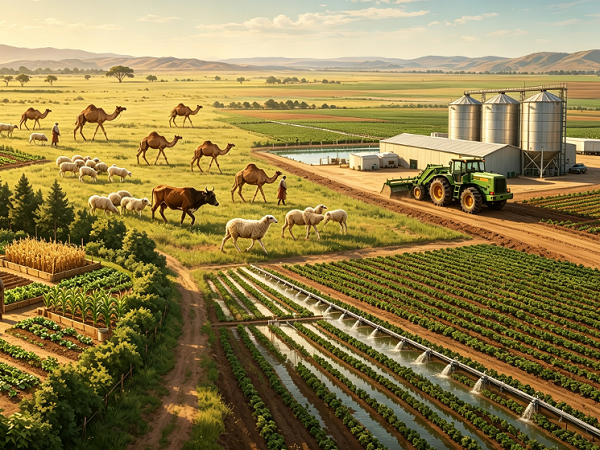
I. Subsistence Cultivation: Traditional Self-sufficient Farming
Subsistence cultivation is the most traditional and widespread farming method, prevalent in remote rural areas of developing countries across Asia, Africa and Latin America. Different from profit-oriented farming, this small-scale cultivation focuses solely on producing enough food to feed farmers and their families, with almost no surplus for market trading. Farmers rely on simple manual tools, natural rainfall and traditional planting experience, with minimal use of chemical fertilizers, pesticides and mechanical equipment. Though it requires low capital investment and adapts to fragmented small land parcels, its output is limited and highly vulnerable to extreme weather and soil degradation. For centuries, this cultivation type has safeguarded the basic survival needs of impoverished rural communities, yet it struggles to generate economic growth or improve living standards.
II. Shifting Cultivation: Rotational Slash-and-Burn Farming
Shifting cultivation, commonly known as slash-and-burn agriculture, is a field-rotation farming system unique to tropical and subtropical forest regions. Farmers clear wild vegetation by cutting and burning, plant crops on the reclaimed land for two to three years until soil fertility is exhausted, then abandon the plot and move to new land for reclamation. The abandoned farmland will naturally restore its fertility through long-term fallow and vegetation regrowth. This low-tech cultivation method adapts to primitive ecological environments and reduces pest and disease risks through land rotation. However, with rapid population growth, shortened fallow periods have led to severe deforestation, soil erosion and biodiversity loss. Currently, many tropical countries are guiding local farmers to phase out this traditional model to balance agricultural production and ecological protection.
III. Pastoral Nomadism: Mobile Livestock-Based Cultivation
Pastoral nomadism is a livestock-dominated cultivation type practiced in arid and semi-arid grassland regions, including Central Asia, North Africa and the Australian outback. Instead of crop planting, herders raise cattle, sheep, camels and other livestock, migrating seasonally with their herds to search for fresh pasture and water sources. This mobile cultivation model fully adapts to fragile grassland ecosystems with sparse rainfall and unsuitable soil for crop growth. It provides herders with basic living materials such as meat, milk and wool, and supports regional handicraft development. Nevertheless, overgrazing caused by increased livestock numbers and reduced pasture areas has triggered grassland desertification. In recent years, many regions have promoted settled pastoralism and rotational grazing to achieve sustainable development of animal husbandry.
IIIV. Commercial Cultivation: Modern Industrialized Farming
Commercial cultivation represents the modern industrialized farming model, prevailing in developed countries and emerging agricultural powers. Oriented entirely by market demand, this large-scale, intensive cultivation focuses on cash crops and commercial livestock products. It is characterized by high mechanization, standardized management and extensive application of modern agricultural technologies, including precision irrigation, scientific fertilization and pest control. Farms pursue maximum economic benefits through centralized production, large-scale operation and market-oriented sales, supplying grains, fruits, vegetables and livestock products for global trade. While this model boasts high output, high efficiency and strong market competitiveness, it also faces challenges such as over-reliance on chemical inputs, single crop structure and high operational costs.
Agricultural analysts point out that the four cultivation types are not mutually exclusive but coexist and complement each other globally. Traditional cultivation models guarantee basic food self-sufficiency in remote regions, while modern commercial cultivation supports global food circulation and economic trade. Facing current challenges of climate change and food shortages, the future trend of global agriculture lies in optimizing traditional farming methods, upgrading commercial cultivation technologies, and developing eco-friendly, efficient and sustainable composite cultivation systems to ensure long-term global food security.


