
Views: 18 Author: Site Editor Publish Time: 2026-07-06 Origin: Site


I. Core Functional and Tillage Stage Differences
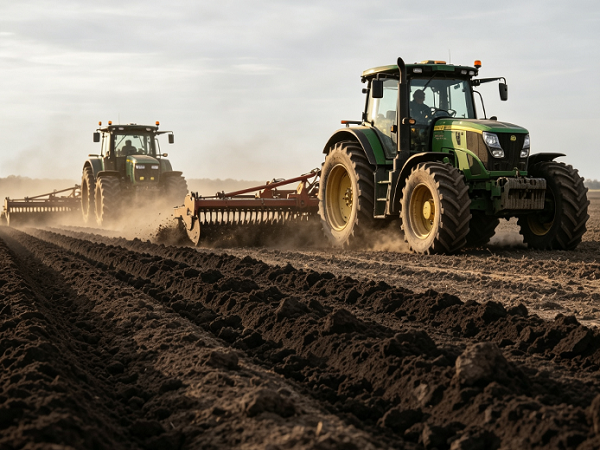
The most fundamental distinction between a plough and a cultivator lies in their tillage stage and core function. A plough is a primary tillage tool, designed for the first and most rigorous soil preparation step before planting. Its primary job is to break up compacted raw soil, overturn deep soil layers, bury crop residues, weeds and organic matter underground. This deep inversion refreshes the soil structure, eliminates persistent weed roots and enhances deep soil aeration, creating a brand-new seedbed for upcoming crops . In contrast, cultivator is a secondary tillage and maintenance tool. It never aims to overturn soil layers but only stirs, loosens and refines the topsoil. It is used either after ploughing to polish the seedbed or during the growing season for regular field maintenance, making it a versatile tool for ongoing crop care rather than initial land reclamation.
II. Varied Working Depth and Soil Operation Modes
Their working depth and soil operation modes further set them apart. Traditional mouldboard ploughs and disc ploughs operate at a depth of 20 to 40 centimeters, fully flipping the upper soil profile to mix surface debris into subsoil. This deep inversion effectively breaks hardpan soil layers that restrict root penetration and improves the soil's ability to store water and nutrients. Plough blades are adjustable in height, allowing farmers to flexibly control tillage depth based on soil hardness and crop needs, and they can turn soil evenly right to the field edges for full land coverage. Cultivators, however, feature fixed shallow working depths, typically ranging from 8 to 15 centimeters. Their sharp tines or blades only pierce and loosen the topsoil without disturbing the subsoil or flipping soil layers. This shallow operation preserves the soil's natural layered structure and avoids exposing moist subsoil to air, preventing excessive water evaporation and soil drying.
III. Divergent Application Timing and Farming Scenarios
Differences in application timing and farming scenarios make the two tools complementary rather than interchangeable. Ploughs are exclusively used at the start of the planting cycle, during pre-season land preparation. They are ideal for reclaiming wasteland, renovating heavily compacted farmland, and preparing fields for deep-rooted crops such as wheat, corn, and rice. For fallow fields or land with thick crop stubble, ploughing is indispensable to clear residual plant matter and reduce overwintering pests and bacteria. Cultivators, by comparison, run through the entire farming cycle. Before sowing, they refine ploughed soil to crush clods and level the field for precise seeding. During crop growth, they perform inter-row tillage to remove young weeds, loosen crusted topsoil, and improve air and water infiltration for crop roots. They are especially suitable for row crops and gentle soil maintenance, where deep soil disturbance would damage existing root systems.
IIIV. Differences in Cost, Efficiency and Environmental Impact
The two implements also vary greatly in operational efficiency, cost, and environmental impact. Ploughing is a high-energy, high-cost operation. Its deep tillage requires powerful tractor support, consumes more fuel, and demands higher maintenance costs for heavy-duty blades and mechanical parts. While effective for thorough soil renewal, excessive ploughing can disrupt soil microbial communities and cause topsoil erosion, conflicting with modern conservation tillage concepts. Cultivators, with their lightweight structure and shallow working mode, boast lower fuel consumption, faster working speed, and simpler daily maintenance. They cause minimal soil disturbance, protect soil biodiversity, and support sustainable farming by reducing soil degradation. For small-scale farms and seasonal quick field maintenance, cultivators deliver far better cost-performance ratios.
V. Professional Advice on Tool Selection
Agricultural experts emphasize that choosing between a plough and a cultivator depends on field conditions and farming goals. "Ploughs transform the soil foundation for new planting seasons, while cultivators maintain soil health throughout crop growth,” explained a senior agronomist at the International Farming Research Institute. "Blindly replacing one with the other will either lead to insufficient soil preparation or unnecessary soil damage.”
As sustainable agriculture gains global popularity, farmers are increasingly adopting combined tillage strategies: seasonal deep ploughing for soil regeneration plus regular shallow cultivating for field maintenance. This scientific combination balances land productivity and soil protection, maximizing both crop yields and long-term farmland sustainability. For modern growers, mastering the functional differences between ploughs and cultivators has become a basic skill for standardized, efficient, and eco-friendly farming.


