
Views: 16 Author: Site Editor Publish Time: 2026-07-07 Origin: Site


Many home gardeners and new farmers frequently confuse cultivating and tilling, treating the two soil management practices as identical agricultural tasks. Both methods involve mechanical soil loosening and aim to boost crop growth, leading to widespread misconceptions that they are interchangeable. However, agricultural scientists and veteran farmers emphasize that cultivating and tilling differ fundamentally in purpose, depth, timing, and ecological impact, with distinct applications in modern sustainable farming systems.
I. Core Differences in Depth and Core Functions
At the core of the distinction lies operational depth and primary objectives, the two most critical factors separating the two practices. Tilling is a deep, intensive soil preparation process designed to reset soil conditions before planting. Typically penetrating 6 to 10 inches into the ground, tilling fully overturns compacted soil, breaks up hard earth clumps, and buries crop residues, weeds, and organic matter deep underground. Its core function is to create a loose, uniform seedbed for new crops, laying a foundational growing environment for upcoming planting seasons.
In contrast, cultivating is a shallow, gentle maintenance practice that targets only the top 2 to 4 inches of topsoil. Unlike tilling's but their functional roles in the agricultural cycle are irreplaceable. Tilling is a transformative pre-planting preparation method for soil reconstruction, while cultivating is a protective in-season maintenance technique for crop conservation. For small-scale gardeners and commercial farmers alike, mastering the difference is key to balancing high crop productivity and long-term soil sustainability.
II. Different Timing and Application Scenarios
Timing and application scenarios further set the two practices apart. Tilling is a pre-planting preparation task, usually conducted in early spring before sowing or in late fall after harvest. It serves as a one-time foundational treatment for farmland, especially effective for newly reclaimed land, heavily compacted soil, or fields with thick residual crop stubble. Experts note that excessive tillage poses significant risks: over-turning soil disrupts soil structure, kills beneficial microbial communities, and increases soil erosion and nutrient loss, which is why modern sustainable farming advocates reduced tillage frequency.
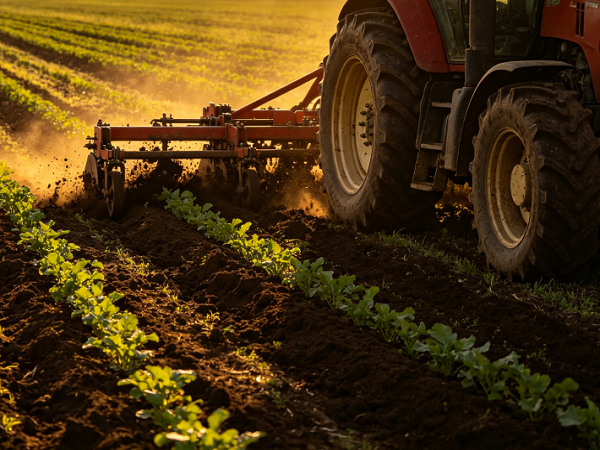
Cultivating, by definition, is an ongoing in-season management activity. Farmers perform cultivation multiple times throughout the growing cycle of row crops such as corn, soybeans, and vegetables. During crop growth, topsoil easily compacts due to rainfall and field management, and weeds compete fiercely with crops for nutrients and sunlight. Regular cultivation relieves surface compaction, suppresses weed growth, and enhances air and water circulation in the root zone, steadily optimizing the growing environment for mature crops without disrupting underground stability.
III. Distinct Tools and Operational Modes
Equipment requirements also reflect the practical differences between the two methods. Tilling relies on high-power machinery, including heavy-duty rototillers and tractor-driven plows, which deliver strong penetrating force to break and flip deep soil. Cultivating uses lighter, more precise tools, ranging from hand-held hoes and small garden cultivators to light tractor-mounted cultivators. These tools are engineered for shallow stirring rather than deep excavation, ensuring targeted soil maintenance while safeguarding crop roots.
IIIV. Value of Standardized Agricultural Operations
The overlap between cultivating and tilling exists in basic mechanical principles, both agitate soil to improve growing conditions, but their functional roles in the agricultural cycle are irreplaceable. Tilling is a transformative pre-planting preparation method for soil reconstruction, while cultivating is a protective in-season maintenance technique for crop conservation. For small-scale gardeners and commercial farmers alike, mastering the difference is key to balancing high crop productivity and long-term soil sustainability.
As sustainable agriculture gains global popularity, the correct application of tillage and cultivation has become a basic professional skill. Experts recommend deep tillage only when soil compaction or stubble accumulation requires thorough renovation, and regular shallow cultivation as the primary in-field management method. This scientific combination maximizes farmland efficiency, protects soil ecosystems, and supports stable agricultural production.


