
Views: 14 Author: Site Editor Publish Time: 2026-07-08 Origin: Site


As the summer planting seasons kick off across global farmlands, countless new and seasoned farmers face a fundamental yet critical question: Should they plow or cultivate the soil first before sowing crops? The order of these two core tillage operations directly impacts soil structure, weed control, seed germination and final crop yields. After decades of field verification and technological iteration, agricultural authorities and agronomy experts have confirmed a unified standard workflow, while also explaining flexible adjustments for modern conservation tillage systems.
I. Key Differences Between Plowing and Cultivation
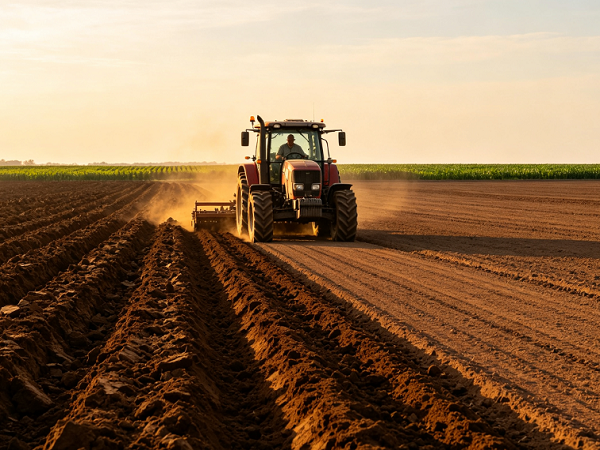
To resolve the confusion, it is essential to distinguish the core functions of plowing and cultivation, two distinct tillage steps with unique purposes and working depths. Plowing, also defined as primary tillage, is the foundational soil preparation process. It uses moldboard or disc plows to turn over the deep soil layer, typically 20 to 30 centimeters below the surface. Its key tasks include breaking up compacted hard soil layers, burying crop residues, dead weeds and organic fertilizer into the subsoil, and loosening hardened farmland formed by long-term planting and rainfall compaction. Dating back to ancient agricultural civilization, plowing has long been the first step of land reclamation, laying a basic loose soil environment for crop root growth.
Cultivation, classified as secondary tillage, is a refined soil finishing procedure carried out after plowing. Operating at a shallower depth of 5 to 15 centimeters, it relies on cultivators and harrows to crush large soil clods, level the field surface, homogenize soil texture, and eliminate residual small weeds in the topsoil. Unlike plowing's deep soil turnover, cultivation focuses on optimizing the surface seedbed, ensuring close contact between seeds and soil to improve germination rates. In traditional conventional farming systems, the procedural logic is clear: deep plowing first to renovate the overall soil structure, followed by shallow cultivation to polish the planting layer.
II. Field Data Validates Standard Tillage Order
Field practice data from global agricultural experimental stations further supports this standard process. In comparative trials of corn and wheat planting, fields processed by plowing prior to cultivation showed a 12% higher soil organic matter utilization rate, 18% lower weed density, and an average 8% increase in crop yield compared to fields with reversed operations or single tillage. For barren, compacted, or long-term fallow farmland, the priority of plowing is even more prominent, as it effectively improves soil aeration and water retention capacity.
III. Flexible Adjustments for Modern Sustainable Farming
However, experts also note that modern sustainable agriculture has introduced flexible adjustments for specific scenarios, breaking the rigid single procedure. The rising conservation tillage system, designed to protect soil ecology and reduce water and soil loss, promotes reduced-till and no-till modes. In mature fertile farmlands with loose soil and little residue, farmers can appropriately reduce plowing frequency and adopt shallow cultivation directly to refine the seedbed, lowering mechanical operation costs and soil erosion risks.
IIIV. Regional and Seasonal Tillage Adaptations
In addition, seasonal and regional differences require targeted adjustments. In rainy and humid regions, plowing first helps drain deep soil water through soil turnover, avoiding seed rot caused by waterlogging; in arid areas, timely cultivation after plowing can lock soil moisture and reduce evaporation. For organic farming that focuses on ecological balance, the plow-first sequence remains the mainstream, as it fully mixes organic fertilizers into the soil and promotes natural decomposition of residues.
V. Mechanized Tillage Follows Traditional Scientific Logic
As agricultural mechanization continues to upgrade, integrated tillage machines can complete plowing and cultivation in one pass, but agronomists stress that the internal operation logic still follows plowing first and cultivation second. The integrated equipment first turns over deep soil via plow components, then crushes and levels surface soil through cultivation accessories, essentially retaining the scientific traditional procedural principle.
In summary, the universal golden rule for conventional crop planting is plow first, then cultivate. Direct cultivation without plowing leads to shallow, hard, weed-prone soil, while plowing without subsequent cultivation results in uneven soil and poor seedbeds. With the advancement of smart agriculture, farmers can adjust tillage intensity according to soil conditions, crop types, and ecological needs, but the basic operation sequence remains the core of standardized field preparation. This time-tested farming logic continues to support efficient, eco-friendly, and high-yield modern agricultural production worldwide.


