


In today's rapidly advancing agricultural mechanization, rotary tiller is the core process of land preparation. For complex plots such as southern paddy fields, rotary tillage machines with strong adaptability and high durability directly affect the quality of subsequent sowing and crop yield. At the same time, the quality of regular rotary tiller suppliers and matching filters and other accessories has also become a key factor affecting the efficiency and profitability of machine operators.
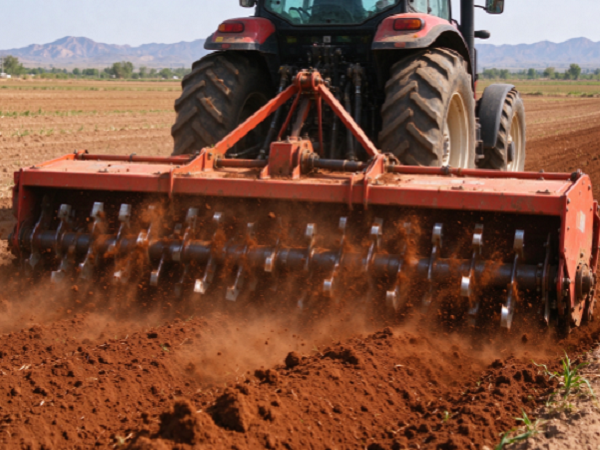
From the current situation of the industry, in recent years, the scale of the domestic agricultural machinery market has continued to grow. As a widely used land preparation tool, rotary tillers have been continuously increasing in market ownership, but there is also a problem of mixed products. Many small manufacturers, in order to reduce costs, use thin sheets and ordinary cast steel gears to produce rotary tillers with poor adaptability, especially for sticky and high resistance plots such as southern paddy fields. This can easily lead to problems such as blade shaft deformation, welding cracking, and oil seal leakage, which not only increases maintenance costs but also delays farming time. Regular suppliers place greater emphasis on product quality and after-sales service, optimizing product design for different terrains and job requirements to ensure better quality. As the core component of engine intake and oil filtration, the rotary tiller filter has a significant impact on the service life of the equipment. Poor quality filters have insufficient filtration accuracy, which can easily lead to impurities entering the engine and accelerate component wear. Accessories produced by regular manufacturers have stable filtration accuracy and can effectively extend the service life of the equipment.
I. The core characteristics of the rotary tiller filter
iiiFirstly, let's talk about the paddy field rotary tiller. Unlike ordinary dry land rotary tillers, the paddy field plot is muddy and sticky, requiring higher equipment strength, anti entanglement design, and overall weight distribution. Regular products generally do these optimizations: firstly, the thickness of the board is sufficient, the frame strength is high, and it is not easy to deform when deep rotary tillage in rotten fields; Secondly, the blade shaft is dynamically balanced and calibrated, and the blade is made of wear-resistant steel, which is less likely to get tangled with grass and has a longer service life; Thirdly, the all gear transmission design provides higher transmission efficiency, lower operating resistance, and relatively more fuel-efficient performance; Fourthly, it is compatible with various horsepower tractors, with a tillage coverage ranging from 1.25 meters to over 4 meters, which can meet the different needs of small land parcels, individual investors, and large-scale cooperatives.
II. Characteristics of a legitimate rotary tiller supplier
Firstly, it has a complete production qualification and quality control system. From raw material procurement to production and factory delivery, every process is tested, and the products meet national standards; Secondly, there is a comprehensive after-sales network that can quickly respond and solve problems during busy farming seasons; Thirdly, there is sufficient reserve of accessories, and many accessories have a high degree of universality, which makes them easy to purchase and replace, and there will be no situation where the inability to find accessories will delay the operation. And for accessories such as rotary tiller filters, products produced by regular manufacturers generally have filtration accuracy that meets design requirements, good sealing performance, and are not prone to blockage or leakage problems. They can effectively protect the core components of the engine and have a longer service life than inferior products.
III. How to choose Rotary tiller?
Let's talk about the core points of purchasing again. We have compiled a practical purchasing guide for everyone: firstly, look at the suitable terrain. If you mainly work in southern paddy fields, be sure to choose a rotary tiller that is specifically suitable for paddy fields. Do not replace it with a regular dry land rotary tiller. The specialized water field rotary tiller has been optimized in terms of anti entanglement, anti-corrosion, and strength, making it more suitable for operations in muddy land. If you also need to consider operations in northern sandy and hilly land, you can choose products that are suitable for multiple terrains. Secondly, looking at the core configuration, first check the thickness of the board. Regular products generally have higher board thickness, stronger frames, and are less likely to deform during high-intensity operations; Then look at the gear material. High quality rotary tillers often use manganese titanium steel gears, which have high strength, good wear resistance, and are not easily damaged; Choose widened special wear-resistant steel blades for longer service life; The welding process is good to choose robots for automatic full welding, which makes the welding more uniform and reliable, less prone to cracking. The product also needs to undergo high-strength fatigue testing and cross zone durability testing before leaving the factory, making the quality more stable. Thirdly, choose a reputable brand. Legitimate brands have comprehensive quality control and after-sales service, so you don't have to worry about buying inferior products or finding someone to solve problems. Fourthly, when selecting accessories, it is also important to identify reputable manufacturers. For rotary tiller filters, it is recommended to choose legitimate products that match the model of the rotary tiller. Do not buy inferior accessories at a low price to avoid losing big for small gains.
IIIV. Precautions for use
Before operation, check the condition of the rotary tiller filter, clean the impurities on the surface of the filter element, and replace it in a timely manner if the filter element is clogged or damaged; When doing homework, adjust the depth of rotary tillage according to the situation of the plot. For paddy field work, it is generally adjusted to around 15-20 centimeters, and do not overload the work; After completing daily homework, it is necessary to clean the weeds and soil wrapped around the rotary tiller, check the tightening of bolts, and regularly lubricate the transmission parts to effectively extend the service life of the equipment; When stored for a long time, the equipment should be placed in a dry and ventilated place to avoid rusting.


