
Views: 0 Author: Site Editor Publish Time: 2026-10-15 Origin: Site


Many agricultural machinery operators tend to confuse "measuring rotation" and "transfer" when communicating, but in fact, they respectively manage the "body" and "bones" of the rotary tiller. Understanding the difference between these two can not only make your work more convenient, but also effectively avoid mechanical damage caused by misoperation.
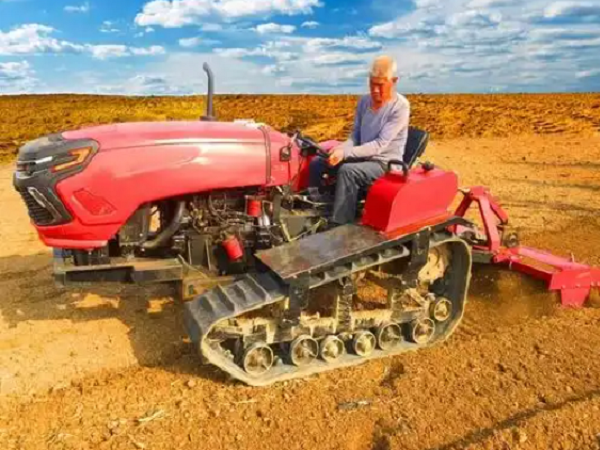
I. Measuring rotation: solving the problem of "posture"
The so-called "rotation measurement" usually refers to the suspension lifting and horizontal adjustment process of the rotary tiller in practical operation, with the core being to control the height of the blade roller above the ground and the levelness of the machine body. Rotary tiller is not a fixed height tool, and the soil hardness and flatness are constantly changing. Therefore, it is necessary to "test" and establish the optimal working posture through hydraulic system or mechanical limit.
To determine whether it is necessary to adjust the rotation parameters, two intuitive indicators should be considered: first, whether the depth of penetration is uniform. If it is found that the left side is deeper and the right side is shallower, it indicates that the frame is tilted and needs to be leveled again; The second is the matching degree between the rotation speed of the blade shaft and the forward speed. Unstable posture can lead to poor soil crushing effect and frequent occurrence of missed tillage. A common practice in practical use is to conduct a no-load test run before working on hard terrain, observing whether the cutter roller touches the bottom and rubs against the ground, in order to fine tune the position of the suspension point and ensure that the cutter shaft is at the optimal cutting angle.
II. Transfer: Solving the problem of "power" transmission
'Transfer' refers more to the power switching and gearbox operation in the transmission system, especially the variable speed or clutch mechanism between the PTO (power output shaft) and the cutter shaft. It determines how the torque transmitted by the engine is converted into the rotational torque of the cutter roll, and whether it has overload protection or speed adjustment function under different working conditions.
The key to understanding transfer lies in observing the load state of the transmission chain. When the rotary tiller encounters obstacles from hard objects such as tree roots or rocks, reliable transfer designs (such as safety clutches or shear pins) will come into play to prevent power transmission from burning out the gearbox or breaking the main shaft. The criterion is simple: during normal operation, the sound of the engine is steady and powerful, and the speed of the knife roller is stable; If there is abnormal roar or sudden drop in speed accompanied by shaking, it is often due to slippage or jamming in the intermediate transmission link, and the belt tension or gear lubrication should be checked.
III. Avoiding pitfalls guide: Do not treat posture as a transmission repair
A common misconception in troubleshooting is the confusion between "unevenness" and "inability to transmit". If it is only uneven soil or difficult to turn on the ground, it is usually due to poor rotation measurement (suspension adjustment), and there is no need to go to great lengths to disassemble the gearbox; On the contrary, if the power transmission is interrupted or there is severe abnormal noise, the maintenance of intermediate transmission components is involved.
In daily maintenance, it is recommended to treat the two separately: focus on checking the sealing of the hydraulic cylinder and the wear clearance of the suspension pin shaft in the rotation measurement part to ensure flexible lifting without jamming; The transfer part focuses on whether the oil level in the gearbox is normal, whether there are cracks in the belt, and regularly cleans the soil and weeds in the transmission part to prevent foreign objects from entangling and affecting the efficiency of power transmission. Only by distinguishing priorities can precise maintenance be achieved.
Measure the posture of the rotary tube and level it evenly into the soil; The power of the transfer pipe is durable only when the transmission is smooth.


