
Views: 0 Author: Site Editor Publish Time: 2026-10-23 Origin: Site


Many agricultural machinery operators are easily confused when choosing a rotary tiller: should they choose flat teeth or hooked teeth? In fact, there is no absolute 'who is more accurate' between these two, only 'who is more suitable'. Choosing the wrong one not only consumes fuel and damages the machine, but also makes it difficult to do the job well. Let's first come to the conclusion: if you want to break the soil flat, choose a flat tooth; if you want to deeply plow and loosen the soil, choose a hooked tooth.
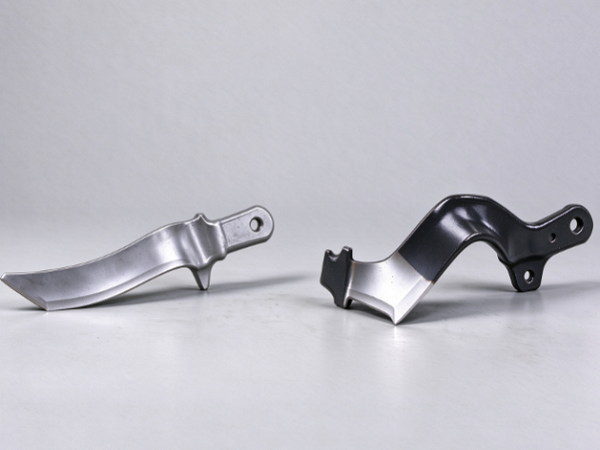
I. Choose by Scene: Dryland Leveling vs. Deep Plowing in Paddy Fields
The design logic of flat teeth (also known as straight knives) and hooked teeth (curved knives/chisel knives) is completely different.
The blade of the flat tooth in rotary tiller is straight, and when working, it is like inserting and pulling a large comb downwards. Its advantages lie in "shredding" and "smoothing". When the knife roller rotates, the flat teeth throw the soil block backwards and shatter it, and after falling back to the ground, the soil layer is relatively uniform. If you are conducting shallow plowing in dry land or require a high level of surface smoothness (such as preparing to sow wheat or corn), flat teeth are the preferred choice. It can quickly mix
straw into the soil and the surface is not prone to large lumps.
The blade of the hooked tooth is curved, like a claw sinking into the soil. Its force direction is not only downward, but also has a strong tendency to 'roll up'. This design can generate strong lifting force, flipping up deep soil while breaking down the hard soil on the surface. In paddy field operations, saline alkali land improvement, or deep plowing scenarios where soil compaction is severe and the plow bottom needs to be broken, the effect of hooked teeth is much better than that of flat teeth. It can effectively increase soil permeability and facilitate root rooting.
II. Clear recommendation
In order to help you choose more clearly, we will provide suggestions based on the situation:
(1) Scenario 1: Conventional cultivation in arid land and pursuit of surface smoothness
Recommendation: Flat teeth
Reason: Flat tooth soil cutting has low resistance and relatively low power requirements for tractors. The soil fragmentation rate is high, and the surface after operation is relatively delicate, so it can be directly sown without the need for secondary raking. Suitable for environments with moderate soil moisture and no large amount of hard debris.
(2) Scenario 2: Working in paddy fields, heavy clay, deep plowing on hard ground
Recommendation: Hook teeth
Reason: Hook teeth have self-cleaning function and are not easily entangled with straw and weeds. Its powerful soil turning ability can thoroughly stir up silt, achieve water and fertilizer mixing, and is very suitable for land preparation before rice planting. For hard dry land, hooked teeth can also loosen deep soil through the action of "digging".
(3) Scenario 3: Mixed working conditions or uncertain soil conditions
Suggestion: If the plot is complex and contains both hard soil and straw, a mixed configuration can be considered. The general principle is to use hooked teeth in the middle row (responsible for deep flipping blocks), and flat teeth on both sides or front and back (responsible for adjusting the flatness of the machine). However, it should be noted that mixed use will increase the difficulty of adjustment and require higher tractor power.
III. The cost of choosing the wrong option and key parameters that are easily overlooked
The consequences of choosing the wrong tool are very intuitive: when using flat teeth to flip hard soil, you will find that the machine shakes violently, the soil blocks are still large, and even the tractor stalls due to excessive resistance; Using hooked teeth to level dry land will make the surface uneven and leave deep grooves, and additional expenses will be incurred to hire someone to rake the land, which will only increase costs.
In addition to shape, there are two key parameters that determine the final effect: Knife shaft speed and linear velocity: Hook teeth usually require higher linear velocity to achieve optimal soil turning and self-cleaning effects. If your tractor has limited power and you forcefully engage in high-speed gear picking operations, it is highly likely to cause blade breakage or bearing damage. Flat teeth for rotary tiller have slightly lower sensitivity to rotational speed and wider adaptability.


